Inside the Birthday Club Format at Breweries and Restaurants
A practical look at how birthday clubs run in breweries and restaurants, from booking to beer flights and group discounts.
A birthday club at a brewery or restaurant is not a membership card you carry in your wallet. It's a standing arrangement between the venue and a group of regulars who want a reliable spot to celebrate, month after month, without renegotiating the deal every time.
What a Birthday Club Actually Includes
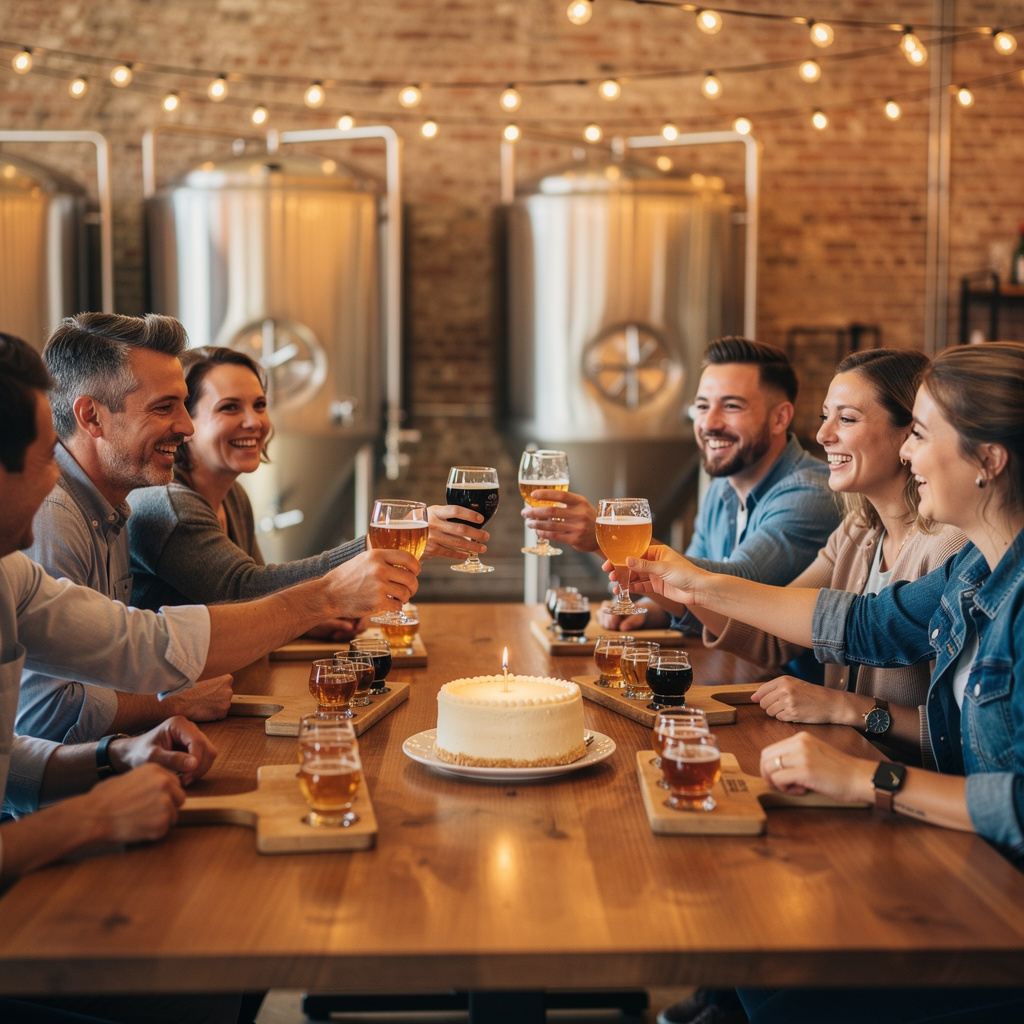
Most clubs bundle three things: a reserved space, a food or drink package, and a small perk tied to the birthday person. A taproom might block off a corner with high-top tables for two hours, throw in a flight of four beers per guest, and give the birthday person a free pint or a house-made pretzel with candles stuck in it.
Restaurants attached to breweries often go further. They'll offer a fixed menu — say, three shareable plates and a dessert per six guests — priced per head instead of per item, which makes budgeting easier for whoever is organizing the night.
The club label mostly signals repeat business. Staff already know the drill: no explaining the tap list from scratch, no arguing about split checks, no scrambling for extra chairs.
How Booking and Pricing Usually Work
Groups typically need eight to fifteen people to qualify for club rates. Below that, it's just a regular reservation with maybe a free dessert.
A deposit of $50 to $100 is standard, taken a week or two in advance and applied to the final bill. This protects the venue against no-shows, which matter more on a Friday night when a ten-top could have gone to walk-in customers instead.
Pricing tends to follow one of two models: a flat per-person rate that covers a set number of drinks and a shared appetizer spread, or a bar tab cap where the group pays for what they drink up to an agreed ceiling. The second model works better for beer flights, since tasting portions vary and a flat rate can undercharge heavy tasters or overcharge light drinkers.
The Brewery Angle: Tours and Tastings
Breweries that run birthday programs usually tack on a short tour or a guided tasting, something a plain restaurant can't offer. A twenty-minute walk through the brewhouse, followed by a flight of four to six pours with a brief explanation of each style, fills the gap between arrival and the meal.
This works especially well for groups where not everyone drinks the same way. Someone can stick to a session IPA at 4.5% ABV while another tries a barrel-aged stout at 9%, and the flight format lets both explore without committing to a full pint of something unfamiliar.
Some venues let the birthday person pick the flight lineup in advance, turning the tasting into a small personalized moment rather than a generic add-on.
Coordinating with Staff and Timing the Evening
The organizer's main job is giving the venue a headcount and a rough schedule at least three days ahead. Kitchens need lead time to prep shareable dishes for a set number of people, and floor staff need to know when the cake or dessert should come out.
A typical flow looks like this: guests arrive over a fifteen-minute window, food service starts once eighty percent of the group has shown up, and dessert or the birthday round comes an hour to ninety minutes in. Waiting longer than that risks losing people who need to head home early.
Music and lighting matter more than organizers expect. A brewery taproom with open seating can get loud fast once other tables fill in, so booking a semi-private corner or a back room, if the venue has one, keeps conversation possible without shouting.
Why the Format Keeps Coming Back
Birthday clubs persist because they solve a real coordination problem: nobody wants to call five people to agree on a restaurant, then call the restaurant to negotiate a group rate, every single time.
Once a group has done this once with a venue that handled it well, they tend to return. The venue gets predictable revenue on weekday evenings that would otherwise be slow, and the group gets a night out where the hard part — deciding where and how — is already settled.